

Home / Insights / What Brazil’s election teaches us about WhatsApp
What Brazil’s election teaches us about WhatsApp
A channel grew from 60,000 to almost 11 million followers in three weeks. Here is what brands, NGOs and institutions in West Africa can take from it.
Three weeks before Brazil’s run-off, Luiz Inácio Lula da Silva was behind. He had trailed Flávio Bolsonaro in the first round, and his campaign was struggling to keep up with the right’s social media machine. Then a congressman named André Janones started a WhatsApp channel called Exército do Lula, Lula’s Army.
After the first round it had about 60,000 followers. By election day it had almost 11 million. Lula won a fourth term, and at his victory rally he called Janones “our general.”
When I read Al Jazeera’s account, I found it inspiring. It confirmed what I already believe about the power of building community online. This is not really a story about politics. It is a story about community, and every brand, NGO and institution can learn from it.
WhatsApp is where the conversation is set
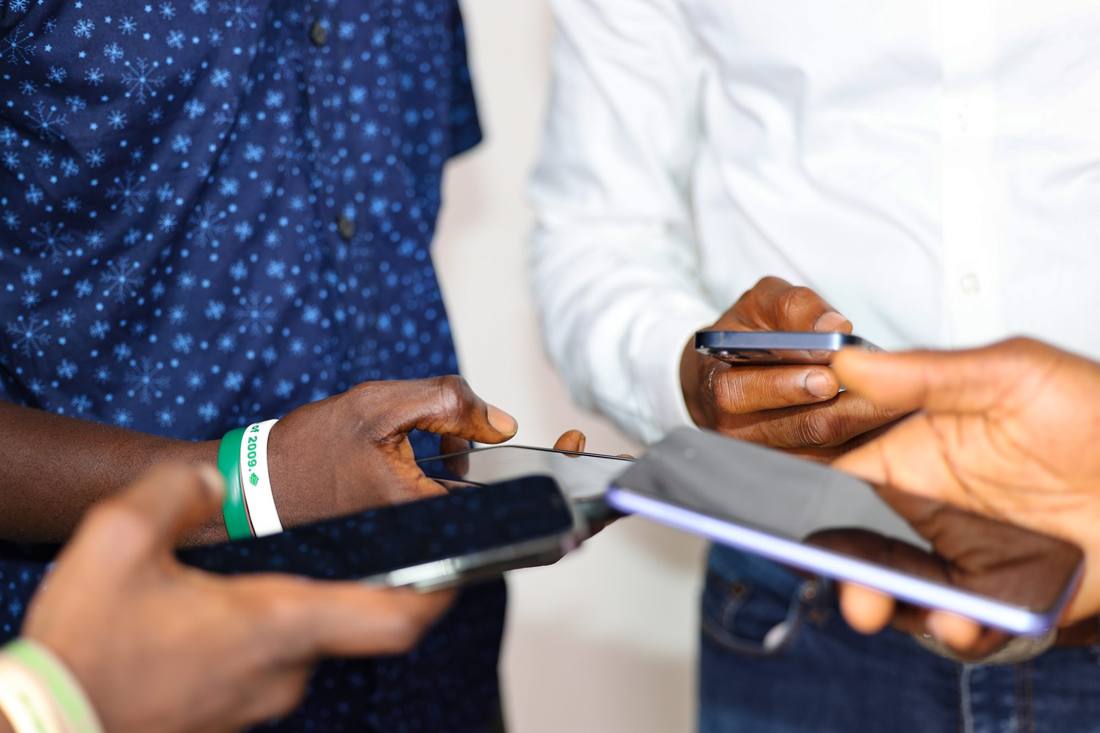
For most people in the global south, including Sierra Leone, WhatsApp is the main way we communicate, in some ways bigger than radio. It connects home and the diaspora, and town and village, instantly.
The difference is in the relationship. Radio reaches the masses, but each listener is alone with it: you and your radio. On WhatsApp, every person who receives a message can pass it on to many more. A voice note recorded in Amsterdam can reach a farmer in Gbangbatoke and a nurse in Upper Marlboro the same afternoon, and each of them can forward it to their own groups. Radio speaks to you. WhatsApp lets you speak to everyone you know.
For the people who drive the conversation and set the issues, online and offline, it matters more than radio, Facebook or TV.
The broadcast channel is underused
Most of us still use WhatsApp the traditional way: groups and voice notes. Broadcast channels are newer, and many organisations struggle with them. A channel is one-way. Followers cannot reply, only react and forward, so it is harder to build and keep going.
But when you have a specific issue or cause, a channel is powerful. It brings people together under one umbrella and lets you send video and voice to all of them at once. Some of Lula’s Army’s messages drew tens of thousands of reactions. One, sent late on election night, drew more than 225,000.
From passive listeners to people on a mission
What impressed me most was the crowdsourcing. The community was called an army. If you joined, you were a soldier, and soldiers get missions: recruit three friends, share this video, push this hashtag.
That is how you activate a community. A broadcast audience is passive by default. A mission turns listeners into people who act. I have seen crowdsourced content campaigns before, but this felt bigger and far more meaningful for the people taking part. I am going to use this idea, and I am convinced it would work in Sierra Leone.
People need to be prompted. If you want someone to like, comment, post or take an action, tell them, clearly and specifically.
“A broadcast audience is passive by default. A mission turns listeners into people who act.”
The messenger matters
Janones became a character in the campaign: all-caps messages, urgent calls to action, cheering supporters on from morning to night. He was a Lula ally, but not the candidate and not the party’s press office. That is a large part of why it worked. It felt like an ambassador doing it on Lula’s behalf, not a campaign talking about itself.
In Sierra Leone the spokesperson role usually sits in-house, with the PRO or communications officer, and more organisations now hire influencers. Brazil is a reminder to look further: your most powerful voice may be a fan.
“Your most powerful voice may be a fan.”
Intentional, but unpolished
When the campaign needed a lift, Janones pushed for simple, selfie-style videos of Lula drinking coffee and visiting homes.
Audiences today find unpolished normalcy more powerful than slick production. Everyone is tired of being sold to. When content looks too polished, people switch off. When it feels like a vlog or a documentary, they lean in. The message should still be intentional. It just should not look manufactured.
Turn the attack into belonging
In the final debate, Bolsonaro mocked Lula for losing a finger. Lula answered with the story of losing it at 17 on a factory night shift, and tied it to every worker injured by an employer’s negligence. Janones pushed the hashtag #SomosTodos9Dedos, “we are all nine fingers,” and supporters posted photos of their own injuries. An insult became a shared identity.
I have watched this happen up close. In October 2016, before Ghana’s elections, supporters of the then ruling party posted a photo of opposition candidate Nana Akufo-Addo drinking Kalyppo, a juice box made for children. It was meant to make him look small. It backfired, because it was relatable, and his supporters started posting their own Kalyppo photos.
Kalyppo was our client, and a children’s brand caught in an election is a real risk. We kept Kalyppo completely apolitical: no comment, no sharing the photo, no interviews. We put out unifying messages and raised the social ad budget by 600%. Kalyppo’s Facebook following went from 5,500 to 40,000 in a week, and peaked at 90,000 by December. An attack became one of the brand’s best positioning moments.
Where to draw the line
Janones also borrowed tactics associated with his opponents, including negative campaigning and “content of questionable origin.” Political campaigns often push the boundaries. Brands and leaders cannot afford to. The truer you are to your cause and to who you are, the better it works. Manipulation may win a news cycle in politics. For a brand or an NGO, it does not last.
What worries me most at election time is how fast misinformation travels on WhatsApp, and how few safeguards people have now that AI makes it easier than ever to fake and manipulate. Sierra Leone already knows how far one voice can carry. After the August 2022 protests, in which dozens of people died, the government accused a Netherlands-based social media commentator known as Adebayor, whose WhatsApp broadcasts drew a huge following, of inciting the violence. Anyone communicating with Sierra Leoneans before an election should plan for that as seriously as their own messages.
“Manipulation may win a news cycle in politics. For a brand or an NGO, it does not last.”
Yes, you can measure it
One historian says there is no way to prove the channel delivered votes. That may be true of votes. It is not true of influence. If something you started on WhatsApp comes back to you from strangers, or shows up on people’s statuses and across wider social media, it has crossed the threshold. And when you give people missions with a hashtag attached, you can count the recruits and the posts. Build the measurement into the ask.
Build the community before you need it
Do not create a community for your organisation. Create a community of fans of the specific thing you do, or the cause you support. Get that right and keeping people engaged is not hard.
For Lula, the path is obvious. Lula’s Army can become the government’s public information channel. You joined the army. You took the mission. Now see the mission in action.
What to do next week
- Find what unites your people. Name it, and use the word community: “this is a community for…”
- Start with a broadcast list. Send a weekly or fortnightly broadcast to your contacts and see how people respond before moving to a full channel.
- Give them a mission. Ask for one specific action, with a hashtag so you can see it travel.
And stop treating WhatsApp as personal. Most people still use it only for family and friends, even with WhatsApp Business available. It is the best digital tool for mass communication.
Want to talk about this? Let’s talk.
Tell us what you are building, who you need to reach and when.